WhatsApp Lead Generation: 15 Strategies That Actually Work in 2026
Practical strategies for generating and nurturing leads on WhatsApp in 2026, from QR codes and click-to-WhatsApp ads to AI agents and referrals.
Last reviewed: 27 sept 2026
Reviewed by: Waslo Editorial Team
Puntos clave
- WhatsApp lead generation works best when traffic acquisition and conversation handling are designed as one system.
- Driving leads into WhatsApp is only half the job. The real advantage comes from qualification, speed, and follow-up once the conversation starts.
- An AI agent improves lead generation economics by increasing response speed and reducing drop-off after first contact.
- This article supports both top-of-funnel interest and commercial buying intent when connected to setup and qualification guides.
WhatsApp Is the Highest-Converting Lead Channel You Are Probably Underusing
WhatsApp lead generation works by creating low-friction entry points — click-to-WhatsApp ads, QR codes, website buttons, and Google Business Profile messaging — that funnel prospects into conversations, then qualifying and following up on those conversations instantly. With a 98% message open rate, it converts far better than email or forms when traffic and conversation handling are designed as one system.
Every business wants more leads. Most businesses pour money into channels with declining returns — email campaigns with single-digit open rates, social media posts that vanish in hours, and contact forms that feel like shouting into a void.
Meanwhile, WhatsApp sits in the background with a 98% message open rate and an average response time measured in minutes, not days. Over 2 billion people use it. In many markets, it is not just a messaging app — it is how people communicate with businesses by default.
Yet most companies still treat WhatsApp as something their sales team uses informally, with no strategy, no automation, and no system for turning conversations into qualified leads.
This article outlines 15 concrete strategies for generating leads through WhatsApp in 2026 — not theoretical ideas, but practical tactics you can implement this week.
Once you have lead flow coming in, continue with Qualify WhatsApp Leads with AI, AI Lead Classification Guide, and WhatsApp Sales Funnel Guide.
Part 1: Driving Traffic Into WhatsApp Conversations
The first challenge is getting people to message you on WhatsApp in the first place. These strategies focus on creating entry points that funnel prospects into conversations.
1. Click-to-WhatsApp Ads on Meta Platforms
Facebook and Instagram offer click-to-WhatsApp ad formats that open a WhatsApp conversation directly when clicked. Instead of sending traffic to a landing page (where most visitors bounce), you are sending them into a direct conversation where engagement is almost guaranteed.
How to make it work:
- Use the ad creative to set expectations. "Message us for a free quote" or "Chat with us to check availability" gives people a reason to start the conversation.
- Pre-fill the first message. WhatsApp allows deep links with pre-populated text, so the customer does not face a blank chat. Something like "Hi, I saw your ad for [product]. I'd like to learn more." removes friction.
- Target warm audiences. Retargeting website visitors or past customers with click-to-WhatsApp ads consistently outperforms targeting cold audiences with the same format.
- Have an AI agent ready to respond instantly. If someone clicks at 11 PM and gets no reply until morning, you have wasted the ad spend.
Click-to-WhatsApp ads typically deliver 3-5x higher conversion rates than ads that drive to landing pages, because the conversation format creates immediate engagement rather than passive browsing.
2. QR Codes on Physical Materials
QR codes that open a WhatsApp conversation are one of the simplest and most effective offline-to-online bridges.
Where to put them:
- Business cards (replace or supplement the phone number)
- Product packaging and receipts
- Store windows and point-of-sale displays
- Trade show booth banners
- Vehicle wraps and fleet signage
- Restaurant menus and table tents
- Real estate listing signs
Pro tip: Use a pre-filled message in the QR code URL so you know where the lead came from. A QR code on a business card might pre-fill "Hi, we met at [event name]" while one on a product package might pre-fill "Hi, I have a question about [product]." This gives your team (or your AI agent) instant context.
3. Website Chat Widget That Opens WhatsApp
Instead of a traditional live chat widget that requires someone to staff it in real-time, embed a WhatsApp chat button on your website. When visitors click it, the conversation moves to WhatsApp — where they are already comfortable and where the conversation persists even after they leave your site.
Benefits over traditional live chat:
- No staffing pressure. An AI agent handles the initial conversation.
- Conversations persist. If the visitor leaves your site, the chat continues on their phone.
- Higher engagement. People are more willing to message on WhatsApp than use an anonymous chat box.
- Contact capture. You automatically have their phone number from the first message.
Place the WhatsApp button on high-intent pages: pricing, product detail, and contact pages. Track which pages drive the most conversations.
4. Social Media Bio Links and Posts
Your Instagram, TikTok, LinkedIn, and Facebook profiles should include a direct WhatsApp link. Use a link-in-bio tool if needed, but make sure WhatsApp is prominent — not buried beneath ten other links.
For social media posts, include a clear call to action: "DM us or message us on WhatsApp at [link] for pricing." Many businesses find that WhatsApp generates higher-quality leads than social media DMs because the conversation feels more personal and committed.
5. Google Business Profile WhatsApp Button
If your business has a Google Business Profile (and it should), add your WhatsApp number as the messaging option. When potential customers find you through Google Search or Maps and tap the message button, the conversation starts on WhatsApp.
This is particularly effective for local businesses — restaurants, clinics, salons, repair shops, and retail stores — where customers search with immediate intent.
Part 2: Converting WhatsApp Conversations Into Qualified Leads
Getting someone to message you is step one. Converting that conversation into a qualified lead is step two. These strategies focus on what happens once the conversation starts.
6. AI-Powered Instant Qualification
An AI agent on WhatsApp can qualify leads in real-time by asking the right questions naturally. Instead of a static form, the qualification happens through conversation:
- What are they looking for?
- What is their budget or timeline?
- What is their biggest challenge or requirement?
- Are they the decision-maker?
The AI classifies each lead based on their answers — HOT, WARM, or COLD — so your sales team knows exactly who to call first. This replaces the manual lead scoring that most businesses either do poorly or skip entirely.
The key is configuring the qualification questions to match your actual sales process. A real estate agent needs different information than a SaaS company, and your AI agent should reflect that.
7. Welcome Message With a Clear Value Proposition
The first message your AI agent sends sets the tone for the entire conversation. A generic "How can I help you?" is a wasted opportunity. Instead, lead with value:
For an e-commerce store: "Welcome! We've got free shipping on all orders this week, and I can help you find exactly what you're looking for. What are you shopping for today?"
For a service business: "Thanks for reaching out! I can get you a free estimate in about 2 minutes. Could you describe what you need?"
For a SaaS product: "Hey there! I can answer any questions about our platform or help you figure out which plan fits your team. What would be most helpful?"
The welcome message should do three things: acknowledge the customer, communicate a benefit, and ask a question that moves the conversation forward.
8. Lead Magnet Delivery via WhatsApp
Instead of gating content behind email opt-in forms (where the email often ends up being fake), offer lead magnets through WhatsApp:
- "Message us 'GUIDE' to get our free pricing guide"
- "Send 'CHECKLIST' for our 10-point home buying checklist"
- "Reply 'DEMO' to see a 3-minute video walkthrough"
The advantage is twofold. First, you capture a real phone number instead of a potentially fake email. Second, the conversation continues naturally after delivering the resource — the AI agent can ask "Did the guide answer your questions, or is there anything specific you'd like to know more about?"
9. Automatic Follow-Up Sequences
Most leads do not convert on the first conversation. They get distracted, they need time to think, they are comparing options. Automatic follow-up messages at strategic intervals keep you in the conversation without requiring manual effort.
A proven follow-up sequence:
- 24 hours: "Just checking in — did you have any other questions about [what they asked about]?"
- 72 hours: "Hi [Name], I noticed you were interested in [product/service]. We just updated our [pricing/availability/schedule] — would you like the latest info?"
- 7 days: "Hi [Name], just a quick note — [relevant offer or update]. Let me know if I can help with anything."
Configure a maximum number of follow-ups (two or three is usually right) to avoid being intrusive. The goal is helpful persistence, not spam. In Waslo, follow-ups go to leads marked COLD: each one uses the message you write, after the delay you choose, and they stop as soon as the lead replies — for changing offers, use campaigns.
10. Segmented Broadcast Lists
Once you have built a base of WhatsApp contacts, segmented broadcasts allow you to re-engage them with relevant offers. The key word is "segmented" — blasting the same message to every contact is a fast track to getting blocked.
Segment by:
- Lead classification (HOT, WARM, COLD)
- Product interest
- Location
- How recently they engaged
- Where they entered the conversation (ad, QR code, website)
A WARM lead who inquired about a specific product two weeks ago gets a different message than a COLD lead who asked a general question three months ago.
Part 3: Scaling and Optimizing Your WhatsApp Lead Engine
Once the basics are working, these strategies help you scale and improve performance over time.
11. Referral Programs via WhatsApp
WhatsApp is inherently social. Customers can forward your contact or share your messages with friends and family in seconds. Build a referral program that takes advantage of this:
- "Love our service? Share this link with a friend and you both get 10% off your next order."
- After a positive interaction, the AI agent can say: "Glad I could help! If you know anyone who might need [service], feel free to share our number — we'll take great care of them."
Referral leads from WhatsApp are pre-qualified by social proof. When a friend personally recommends your business and shares your WhatsApp number, the referred lead starts the conversation with a much higher level of trust.
12. Multi-Number Strategy for Different Product Lines
If your business has distinct product lines, customer segments, or geographic regions, consider using separate WhatsApp numbers for each. Each number can have its own AI agent configuration, tailored to the specific audience.
For example, a car dealership might have one number for new vehicles and another for pre-owned. A clinic might have one for new patient inquiries and another for existing patient scheduling. This allows the AI agent on each number to be deeply specialized rather than generically broad.
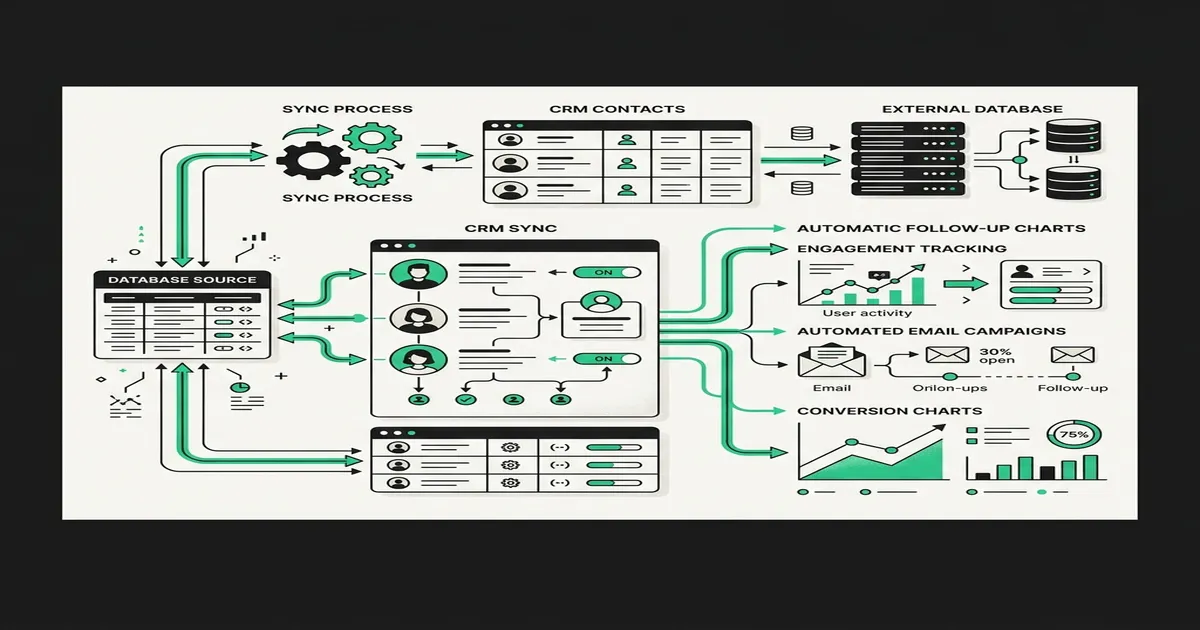
13. Integration With Your CRM and Sales Tools
WhatsApp leads are only valuable if they flow into your existing sales workflow. Set up integrations that automatically:
- Create or update records in your CRM when a new WhatsApp lead is captured
- Sync lead classification and conversation summaries
- Export to CSV for team visibility
- Trigger notifications (via Telegram or other channels) when a high-value lead comes in
Without this integration, WhatsApp becomes another silo that your sales team has to check manually, which defeats the purpose of automation.
14. A/B Test Your Welcome Messages and Prompts
The difference between a good AI configuration and a great one can mean 30-50% more leads qualified. Treat your AI agent's prompts like marketing copy — test different approaches:
- Formal vs. casual tone — which gets more engagement from your audience?
- Question-first vs. information-first — does your audience prefer to be asked questions or given information upfront?
- Short vs. detailed welcome messages — sometimes less is more, sometimes context drives engagement
- Different qualification sequences — does asking about budget early scare people off, or does it help filter faster?
Run each variation for a week, compare lead quality and conversion rates, and iterate.
15. Track and Measure Everything
You cannot improve what you do not measure. Key metrics for WhatsApp lead generation:
- Conversation volume: How many new conversations start each day/week?
- Source attribution: Which channels (ads, QR codes, website, referrals) drive the most conversations?
- Qualification rate: What percentage of conversations result in a qualified lead?
- Classification distribution: What percentage are HOT, WARM, and COLD?
- Response time: How quickly does the first response go out?
- Conversion rate: What percentage of WhatsApp leads convert to customers?
- Cost per lead: How does WhatsApp compare to your other lead generation channels?
Most businesses find that WhatsApp delivers their lowest cost-per-lead and highest-quality leads once the system is properly configured. The key is "properly configured" — the strategies above are not one-time setups. They require ongoing optimization.
Why These Strategies Work Better With AI
All 15 strategies can be implemented with a manual team. But they work dramatically better with an AI agent handling the WhatsApp conversations, for three reasons:
Scale. An AI agent handles 100 simultaneous conversations with the same quality. A human team cannot.
Speed. Instant responses capture leads that slow responses lose. When a customer messages five competitors at once, the first meaningful response wins.
Consistency. Every lead gets asked the right qualification questions, receives the right follow-up at the right time, and gets classified accurately. No lead falls through the cracks because someone forgot to follow up or was having an off day.
The most effective WhatsApp lead generation systems combine the strategies above for driving volume with an AI agent that converts that volume into qualified, classified leads ready for your sales team.
Ready to Get Started?
Waslo gives you a multi-channel AI agent — WhatsApp, Telegram, Instagram, Messenger, email and more — with pay-as-you-go pricing starting at $0/month, zero per-message fees, and setup in under 2 minutes. No WhatsApp Business API required — just scan a QR code and go live.
Start free today — 75 free credits on signup, no card needed.